In This Guide
The Evolution of Transfer Printing
If you're in the print industry and still think "DTF" is just one technology, you need to catch up. The category has evolved rapidly over the past few years, and what started as a single technology has now branched into four distinct solutions.
The confusion is understandable. The acronym "DTF" gets thrown around constantly, but it now covers technologies that use completely different ink systems, different media, and serve completely different markets. We speak with Australian business owners every week who think UV DTF and textile DTF are the same thing. They're not. Not even close.
This guide breaks down exactly what each technology is, how it works, what ink and media it uses, and which GZ Australia machines deliver each capability. By the end, you'll know which technology fits your business.
1. DTF ( Direct-to-Film ) Printing
The Textile Transfer Workhorse

This is what most people mean when they say "DTF". It's the technology that revolutionised custom apparel over the past few years, making short-run garment decoration faster, more affordable, and more accessible than ever before.
DTF prints designs onto a special PET (polyethylene terephthalate) film using water-based pigment inks. Adhesive powder is applied to the wet ink, cured in an oven, then the transfer is heat-pressed onto virtually any fabric type.
Technical Specification
- Machine: Dedicated DTF printer ( Pixy T2 30cm / Pixy T4 60cm)
- Ink System: Water-based Pigment Ink (CMYK + White)
- Media: PET Transfer Film + Hot-melt Adhesive Powder
- Application: Heat Press ( 160-170 °C, 10-15 seconds)
- Compatible Substrates: Cotton, polyester, nylon, leather, blends (light and dark fabrics)
The DTF Process
- Design Creation: Digital artwork is prepared using graphic design software
- Film Printing: The design is printed onto PET film using pigment inks
- Powder Application: Hot-melt adhesive powder is evenly spread over the wet ink
- Curing: The film passes through an oven where powder and ink bond together
- Heat Transfer: The film is pressed onto fabric using a heat press
- Peeling: Once cooled, the film backing is peeled away, leaving the design bonded to the fabric
Why DTF Dominates Apparel Decoration
- Universal Fabric Compatibility: Works on cotton, polyester, nylon, leather, and blends in both light and dark colours
- No Pre-treatment Required: Unlike DTG, fabrics don't need chemical pre-treatment
- Vibrant Colours & Detail: CMYK with white ink produces photo-quality prints with excellent colour saturation
- No Minimum Orders: Cost-effective for single pieces or large runs
- Fast Production: Much quicker than traditional screen printing for small batches
- Excellent Durability: Prints withstand 40-50 + wash cycles when properly applied
Best For
- Custom t-shirts and apparel businesses
- Sports uniforms and team wear
- Promotional merchandise
- On-demand printing with no minimums
- Mixed fabric types (cotton/poly blends)
GZ Australia DTF Solutions
Pixy T2 is a 30cm entry-level production DTF printer with 2 Epson I3200 A1 heads, 15 sqm/h output, and built-in white ink circulation. Perfect for startups and adding transfer capability to existing operations.
Pixy T4 is a 60cm production-volume DTF printer with 4 Epson I3200 A1 heads, 30 sqm/h output, integrated shaker and filter system, with optional fluorescent inks. Built for serious production volume.
2. UV DTF Printing
Hard Surface Transfers with Cold Application

Despite sharing the "DTF" name, UV DTF has almost nothing in common with textile DTF. This technology creates transfers for hard surfaces using UV-curable inks and a two-layer A/B film system.
The key difference? These transfers apply cold. No heat press required. Think of it as creating premium UV-printed stickers that adhere to almost any hard surface.
Technical Specification
- Machine: Pixy U3 (60cm, with built-in laminator)
- Ink System: REI-3 UV Ink (CMYK + White + Varnish)
- Media: A/B Film (adhesive layer + protective carrier)
- Application: Cold Apply (no heat required)
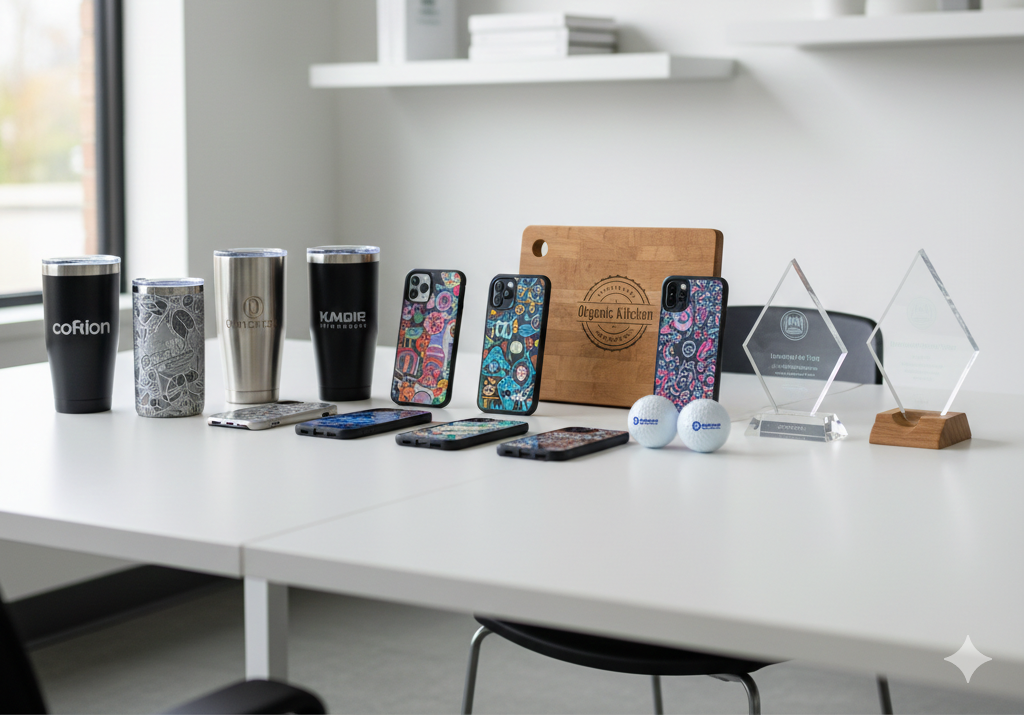
- Compatible Substrates: Glass, metal, plastic, ceramic, wood, phone cases, drinkware
- Special Capability: Gold and Silver Foil Effects
The UV DTF Process
- Print: UV ink (CMYK + White + Varnish) prints onto A-film (the adhesive layer)
- Laminate: B-film (protective carrier) is laminated over the print via the built-in laminator
- Peel: The finished transfer is peeled from the backing
- Apply: Press onto the surface with firm pressure, no heat needed
Why the Built-in Laminator Matters
The Pixy U3 has a built-in laminator for reliable A/B film production. We're sceptical of " A-sheet only" approaches from some sellers. The lamination step is what ensures consistent quality and durability. Without proper lamination, you risk inconsistent adhesion and premature failure.
UV DTF Advantages
- No Heat Required: Cold application means you can decorate heat-sensitive items
- Hard Surface Compatibility: Works on glass, metal, plastic, wood, ceramic, and more
- Curved Surfaces: Applies to irregular and curved shapes
- Gold & Silver Foil: Varnish layer enables metallic foil effects
- 5-Layer Printing: Build up white layers for dimensional effects
- Batch Production: Print transfers in advance and apply as orders come in
- Instant Application: No curing time after transfer
Best For
- Phone cases (hard and silicone)
- Drinkware and tumblers
- Promotional products and corporate gifts
- Glass, ceramic, and metal decoration
- Curved and irregular surfaces
- Products that cannot be heated
- Gold/silver foil effect applications
GZ Australia UV DTF Solution
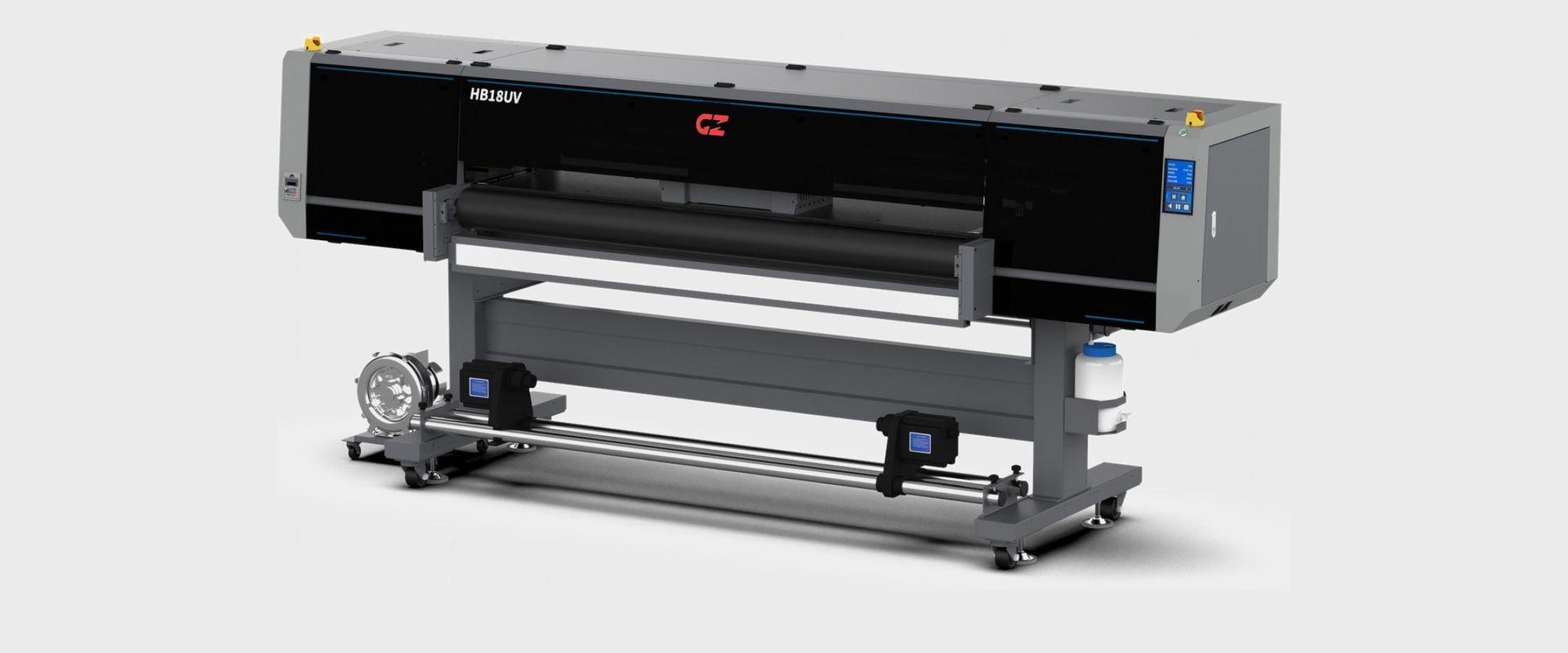
Pixy U3 is a 60cm UV DTF printer with 3 Epson I3200/I1600 U1 heads and built-in laminator. The 2-in-1 system prints and laminates in one machine, streamlining workflow and ensuring consistent quality. Uses REI-3 UV ink for consistency with other GZ UV equipment.
3. TPU Hot Stamp Printing
Premium 3D Texture on Textiles

Here's where it gets interesting. TPU Hot Stamp bridges the gap between UV printing quality and textile application.
This technology uses a dedicated TPU ink system printed onto TPU film via UV flatbed printers. The transfers are then heat-pressed onto fabric, creating premium 3D raised effects with a distinctive woven diamond mesh texture that you simply cannot achieve with standard DTF.
Technical Specification
- Machine: UV Flatbed printers under 900mm ( A3HD, H6090EI/EP, H0906EI) or Pixy U3 configured for TPU
- Ink System: TPU Ink (dedicated system, completely separate from REI-3 )
- Media: TPU Film
- Application: Heat Press
- Compatible Substrates: Textiles including stretch and performance fabrics
The TPU Hot Stamp Process
- Print: TPU ink prints onto TPU film using a UV flatbed printer
- Cure: UV LED instantly cures the ink
- Transfer: Heat press applies the design to fabric
Critical: TPU is a Dedicated Ink System
TPU ink is completely separate from REI-3 UV ink. You cannot switch between them without a full machine flush, which is not practical for daily operation. TPU Hot Stamp capability is a purchase-time decision based on your primary application.
TPU Hot Stamp Advantages
- 3D Texture Effects: Thick raised white layer with distinctive woven diamond mesh pattern
- Visible Depth: Built-up layers create shadows and dimensional appearance
- Premium Finish: Glossy coloured areas with fine stippled grain texture
- Stretch Resistance: TPU layer maintains flexibility and adhesion on stretch fabrics
- Technical Fabric Compatibility: Works on performance fabrics where traditional printing fails
- Superior Durability: Excellent wash resistance and longevity
Best For
- Sports club badges and crests
- Premium sportswear and athletic apparel
- Stretch fabrics requiring flexibility
- Waterproof and technical fabrics
- High-end fashion applications
- Any application requiring visible 3D texture
GZ Australia TPU Hot Stamp Solutions
TPU Hot Stamp capability is available on UV Flatbed printers under 900mm:
- A3HD - Compact A3 desktop UV flatbed, perfect for small-batch TPU transfers
- H6090EI / H6090EP - 60x90cm UV flatbed with Epson I3200 heads, ideal for mid-volume production
- H0906EI - 90x60cm professional UV flatbed for higher throughput
- Pixy U3 - Can also be configured for TPU at time of purchase
4. DTF Embroidery
3D Faux Embroidery Without the Stitching

This is the newest transfer technology, and it's genuinely revolutionary for certain applications.
DTF Embroidery uses a specialised UV DTF Embroidery ink to create transfers that look and feel like real embroidery without a single stitch. Multiple ink layers print onto A/B film, building up three-dimensional texture with fine parallel ridged lines that follow the contours of the design to simulate embroidery stitch patterns.
Technical Specification
- Machine: Pixy U3T (with built-in laminator)
- Ink System: UV DTF Embroidery Ink (dedicated system)
- Media: A/B Film
- Application: Laminate ( built-in ) then Heat Press
- Compatible Substrates: Textiles (apparel, caps, bags, uniforms)
The DTF Embroidery Process
- Print: UV DTF Embroidery ink prints multiple layers onto A-film , creating raised lines that simulate stitch direction
- Laminate: B-film is applied via the built-in laminator
- Transfer: Heat press applies the design to fabric
Why DTF Embroidery is Revolutionary
- No Minimums: Single-piece production is economical, unlike traditional embroidery
- Complex Designs: Photographic detail and colour gradients impossible with real embroidery
- Speed: Minutes instead of hours for complex designs
- Cost: Dramatically lower production cost than traditional embroidery
- Tactile Quality: Genuine 3D grooved ribbed texture customers can feel
- Stitch Simulation: Lines follow contours of design just like real embroidery stitches
Best For
- Brand logos on corporate apparel
- Sports team badges and crests
- Premium fashion details
- Patches and armbands
- School and club uniforms
- Any application where embroidery look is desired without embroidery cost or minimums
GZ Australia DTF Embroidery Solution
Pixy U3T is a dedicated DTF Embroidery machine with built-in laminator and UV DTF Embroidery ink system. This machine is purpose-built for producing faux embroidery transfers with that distinctive lined stitch texture.
Coming March 2026: The Pixy U3T will be announced in March. Contact GZ Australia to register your interest and be first to know when it's available.
Understanding the Ink Systems
This is the bit that trips people up. These four technologies use four separate ink systems. They are not interchangeable.
| Ink System | Technology | Notes |
|---|---|---|
| Pigment Ink | DTF | Water-based , textile-grade |
| REI-3 UV Ink | UV DTF / UV Flatbed | Standard UV ink for hard surfaces |
| TPU Ink | TPU Hot Stamp | Dedicated system for premium textile transfers |
| UV DTF Embroidery Ink | DTF Embroidery | Creates 3D faux embroidery texture |
You Cannot Swap Between These Systems
Switching between TPU, REI-3 , or UV DTF Embroidery inks requires a complete machine flush. This is not something you would do regularly. The ink system is chosen at purchase time based on your primary application.
Technology Comparison
| Feature | DTF | UV DTF | TPU Hot Stamp | DTF Embroidery |
|---|---|---|---|---|
| Primary Use | Textiles | Hard Surfaces | Premium Textiles | Faux Embroidery |
| Ink Type | Pigment | REI-3 UV | TPU | Embroidery UV |
| Media | PET + Powder | A/B Film | TPU Film | A/B Film |
| Heat Required | Yes | No | Yes | Yes |
| 3D Texture | No | 5-layer build-up | Woven mesh | Stitch lines |
| Foil Effects | No | Yes (Gold/Silver) | No | No |
| Machine | Pixy T2/T4 | Pixy U3 | UV Flatbeds/U3 | Pixy U3T |
Which Technology is Right for You?
Choose DTF ( Pixy T2/T4 ) if:
- Apparel is your primary output
- You need versatility across fabric types (cotton, poly, blends)
- Volume matters more than premium texture effects
- You want the most established, proven technology
- You're starting a t-shirt or custom apparel business
Choose UV DTF ( Pixy U3 ) if:
- You decorate hard surfaces like drinkware, phone cases, and promotional gifts
- Heat application is not practical for your products
- You want gold/silver foil capability
- You need to batch-print transfers for inventory
- You work with curved or irregular surfaces
Choose TPU Hot Stamp ( UV Flatbeds/ U3) if:
- You need premium 3D texture effects on textiles
- You print on technical, stretch, or waterproof fabrics
- You also want direct UV flatbed printing capability
- Sports badges and premium positioning is your strategy
- You're willing to commit to a dedicated ink system
Choose DTF Embroidery ( Pixy U3T ) if:
- You want to offer embroidery-look products without embroidery equipment
- Complex logo designs with gradients are common
- Single-piece production economics matter
- Speed and cost outweigh traditional embroidery authenticity
- You serve corporate, school, or sports club markets
Frequently Asked Questions
The Bottom Line
The "DTF" category has evolved rapidly, and most of the market hasn't caught up. What started as one technology has branched into four distinct solutions, each with its own ink system, media, and application.
Understanding which one fits your business model is the difference between a smart investment and an expensive mistake.
If you're exploring any of these technologies for your Australian business, we're happy to talk through the specifics. No pressure, just clarity.
Not Sure Which Technology is Right?
Let's talk. We'll help you find the perfect solution for your business and applications.
Get in Touch