What are you printing on? The GZ Australia range explained

Jake Einspinner • July 28, 2026

The range, explained

What are you printing on? Start there.

Nine technologies. Sixty-three machines. One Australian supplier.

Most people start by shopping for a printer. That's backwards. The material decides the technology, the technology narrows sixty-three machines down to a handful, and then it's only a question of how much you want to make. So this is the whole range grouped by what it puts ink on, with what each process actually does and what it won't do. No spec dumps.

Sixty-two seconds of the range running. Six of the machines below, real jobs, no captions needed.

Nine technologies, plainly explained

Each one is a genuinely different way of getting ink to stay on a material. Knowing which is which is most of the buying decision.

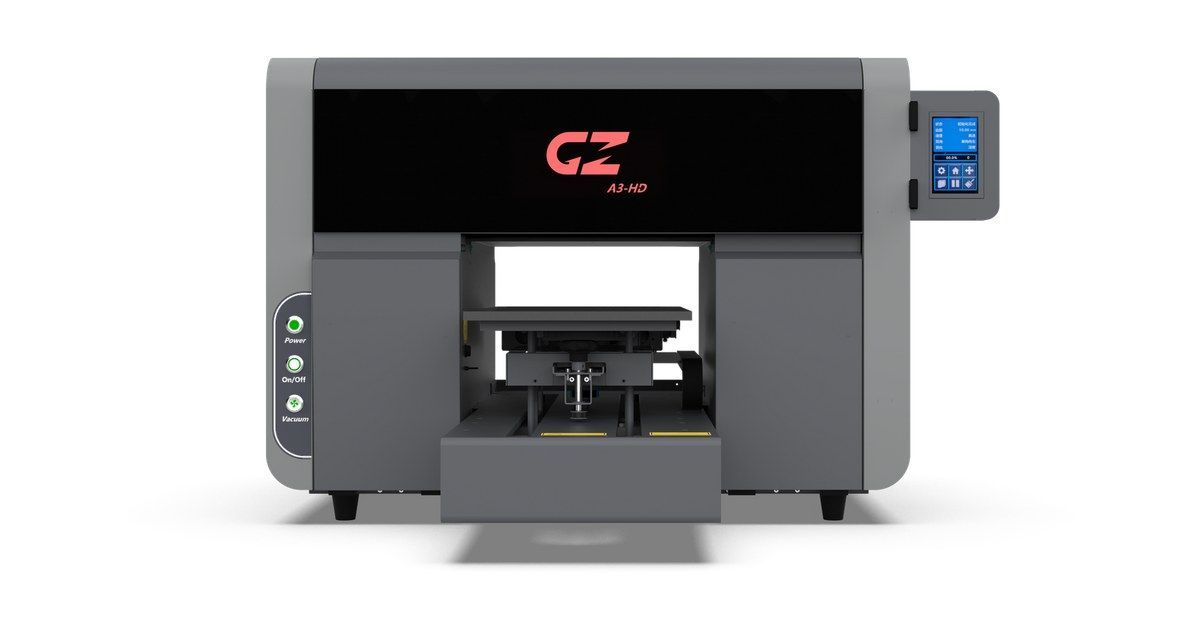
GZ A3HD desktop UV flatbed printer, front view

Shown: A3HD

9 machines, desktop to 3.2m

UV flatbed

Print straight onto the object.

The material sits still on a vacuum bed while the heads pass over it, and UV LEDs cure the ink the instant it lands. Nothing soaks in and nothing needs to dry, so you can pick the piece up as soon as it comes off. White ink lays down an opaque base for dark or clear materials, and a varnish channel adds gloss, matte or raised texture on top.

Best for
Acrylic, timber, glass, metal, leather, ceramic, phone cases, awards, giftware and rigid signage.
Worth knowing
It prints onto flat and near-flat surfaces, so the bed size and the height clearance set what fits. The desktop A3HD takes material up to 85mm thick.
FROM $14,990 + GST See the UV flatbed machines
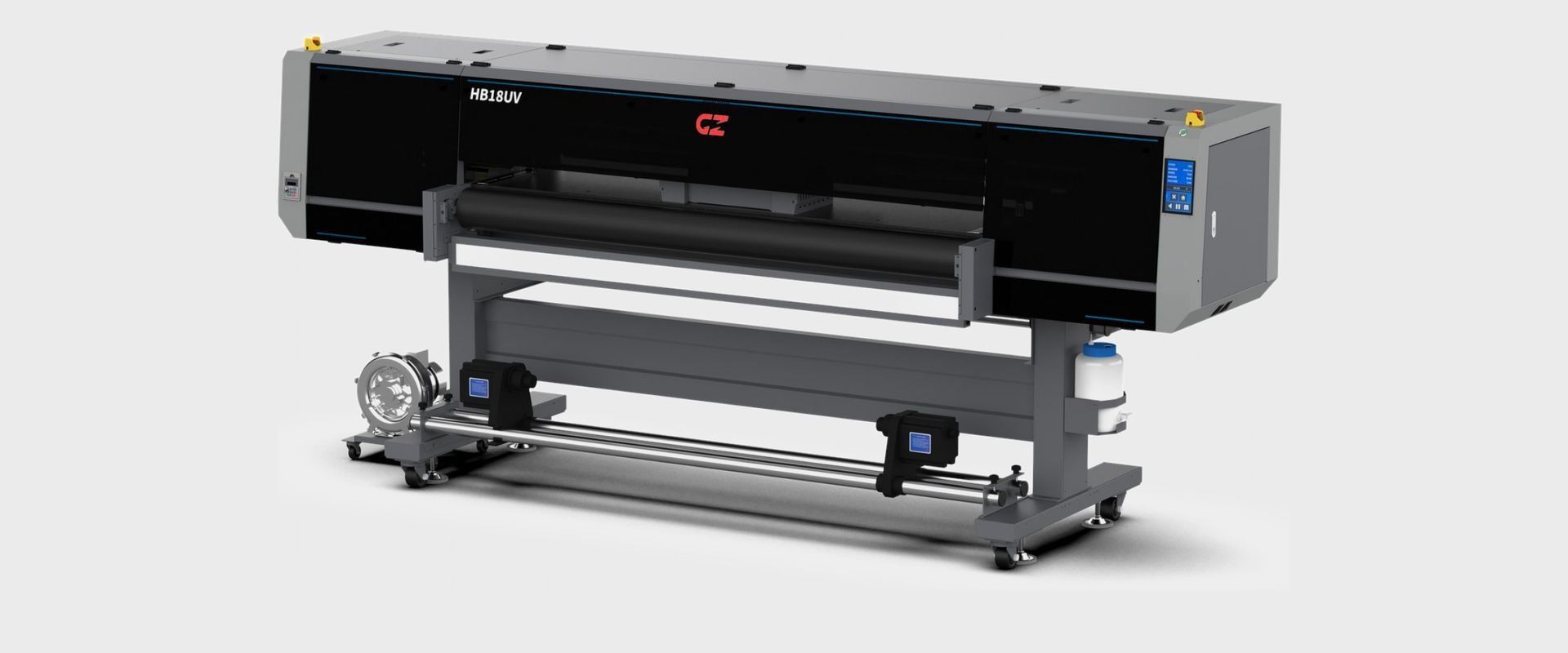
GZ HB18UV PRO hybrid belt UV printer, front view

Shown: HB18UV PRO

7 machines, 1.8m and wider

UV hybrid belt

Rigid boards and roll media on one bed.

A conveyor belt carries the media under the heads instead of a fixed table, so the same machine takes a stack of rigid board or a roll of vinyl without being reconfigured. It's still UV cure, so it prints white and varnish and layers, and the belt is what lets it run long roll jobs and short board jobs on the same day.

Best for
Display panels, rigid sheet, acrylic, board, roll vinyl and soft signage in one shop.
Worth knowing
It replaces two machines, which also means both queues now run through one machine. The HB18UV PRO takes rigid media up to 40mm thick and puts down up to five layers in a single pass.
FROM HB18UV $44,990 + GST | HB18UV PRO $63,990 + GST See the UV hybrid belt machines
GZ ThunderJet AQ1601UV roll-to-roll UV printer, front view

Shown: ThunderJet AQ1601UV

10 machines, 1.6m to 5.2m

UV roll-to-roll

UV signage off a roll, cured as it prints.

Same UV cure as the flatbeds, but the media runs from an input roll, under the heads, and onto a take-up roll. Because the ink cures instantly rather than drying, the print is finished when it comes off the roll and holds up outdoors without lamination. Printing a layer, curing it and printing again is what produces raised and textured effects.

Best for
Roll vinyl, banner, PET film, stickers, and indoor and outdoor signage.
Worth knowing
It's a roll process, so rigid board is a job for the flatbeds or a hybrid. LED UV curing means no mercury lamps to replace.
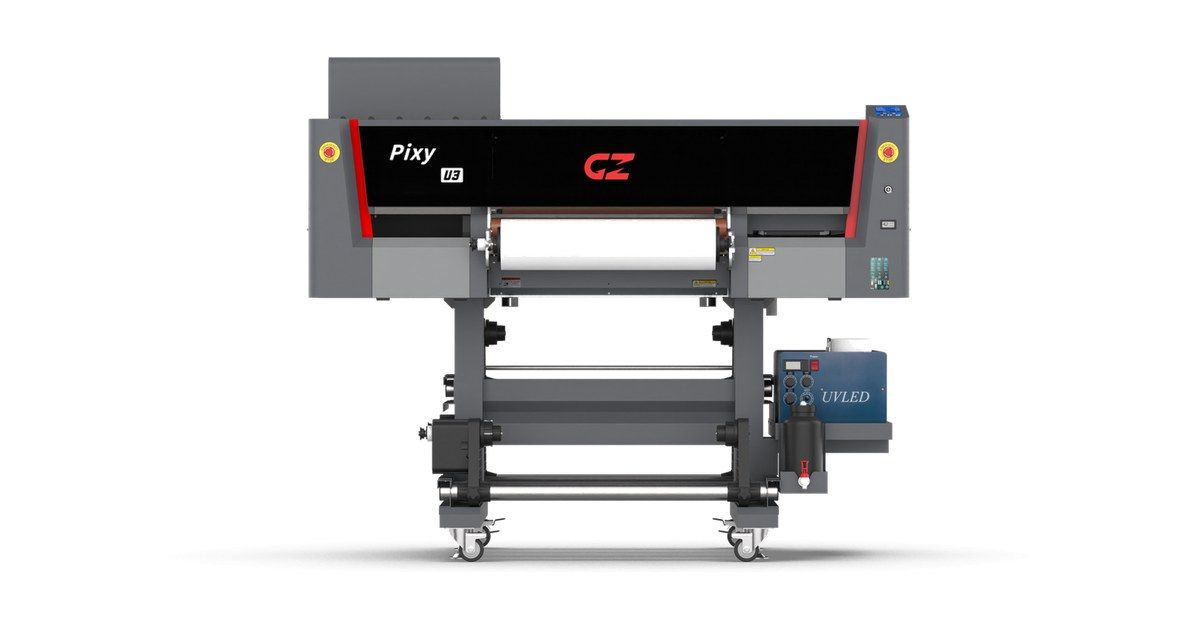
GZ Pixy U3 UV DTF printer with inline lamination, front view

Shown: Pixy U3

4 machines, 60cm class

UV DTF

Peel-and-stick transfers for things you can't put through a printer.

The machine prints colour and white onto a clear film, cures it, then laminates a second adhesive film on top in the same pass. What comes out is a sticker with real UV ink in it. You peel it and press it on by hand, so it goes onto curved bottles, corners and shapes no flatbed could ever reach.

Best for
Drink bottles, phone cases, keyrings, packaging, hard cases and product branding.
Worth knowing
It's a cold-apply process, so there's no heat press and no garment pre-treatment involved. For fabric, that's DTF's job below.
FROM $23,990 + GST See the UV DTF machines
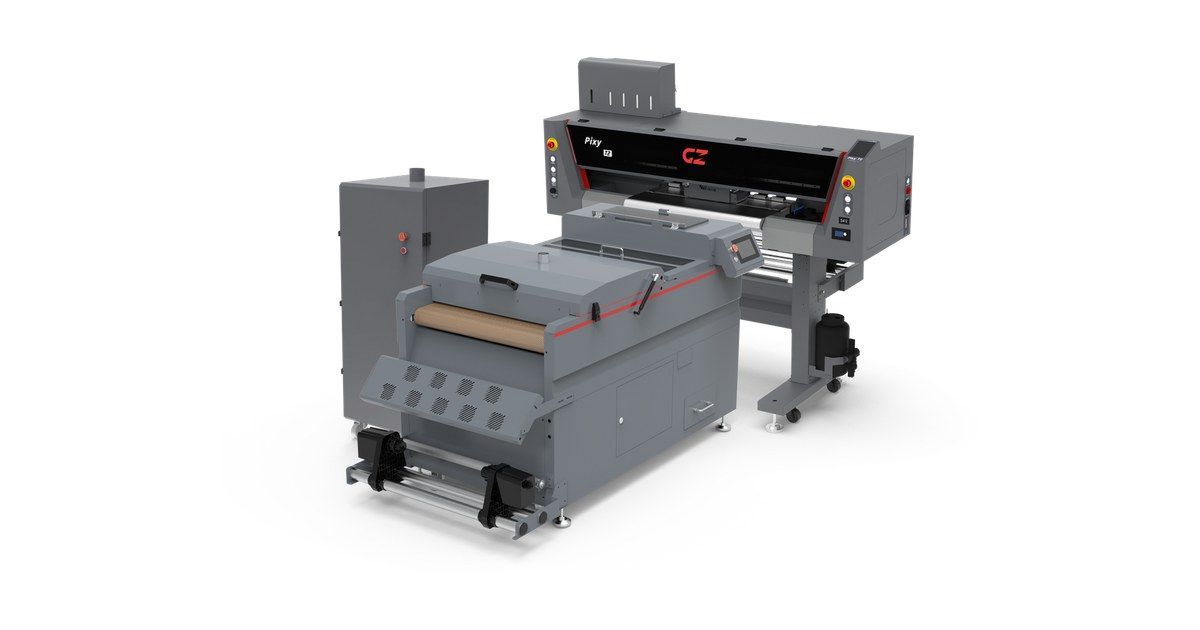
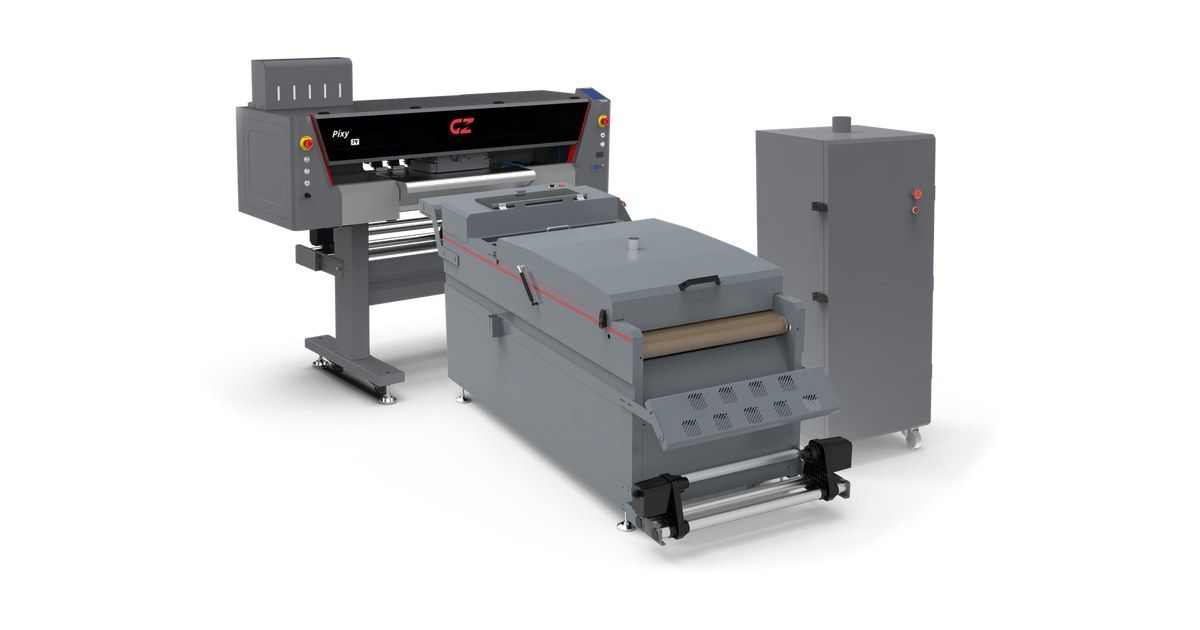
GZ Pixy T2 DTF printer with powder shaker and curing oven

Shown: Pixy T2

3 machines, complete production lines

DTF, direct to film

Any garment, any colour, including black.

Colour goes down on clear film first and white goes down last, so the white ends up as the base once the design is flipped onto the shirt. Adhesive powder is shaken onto the wet white ink and cured in the oven, and a heat press bonds the finished transfer to the garment. Because the white carries the design, the colour of the fabric underneath stops mattering.

Best for
Cotton, polyester and blends, in any colour, from one-offs to full runs.
Worth knowing
It's a three-stage process, so the powder shaker and curing oven are part of the job, not accessories. They come as one line.
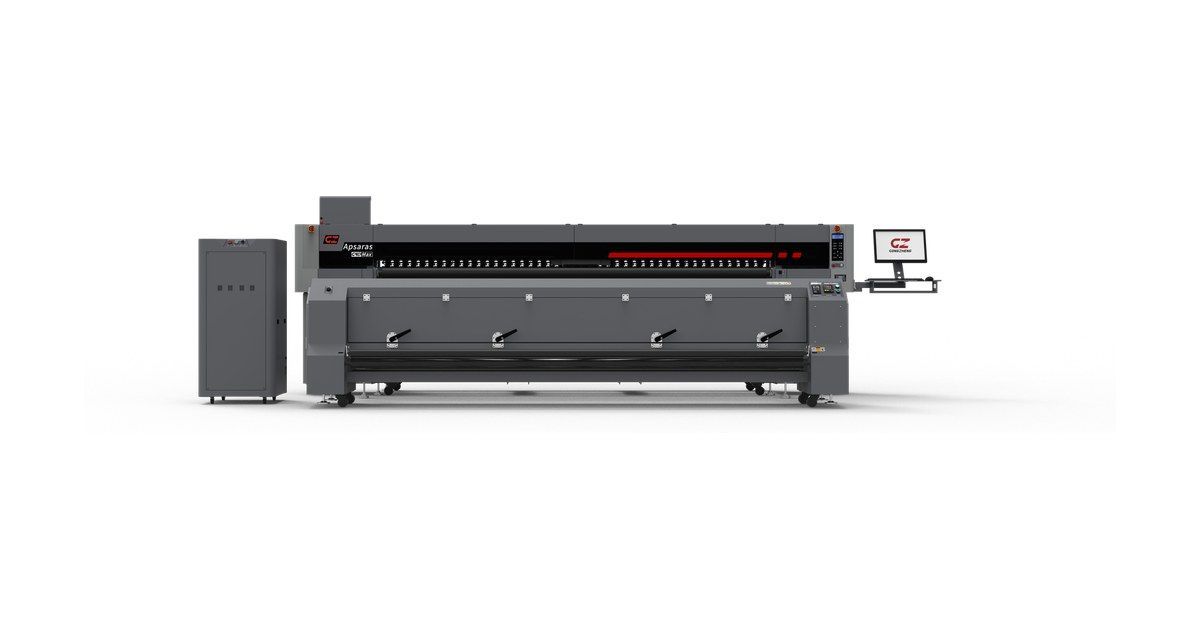
GZ Apsaras G2 dye sublimation printer, front view

Shown: Apsaras G2

10 machines, 1.6m to 3.2m

Dye sublimation

The print becomes part of the fabric.

The machine prints onto transfer paper, then a heat press turns the dye straight from solid to gas and it bonds inside the polyester fibres. There's no layer sitting on the surface, which is why a sublimated jersey doesn't crack, peel or stiffen no matter how many times it's washed or stretched.

Best for
Polyester sportswear, jerseys, flags, soft signage and fabric display graphics.
Worth knowing
The chemistry only works on polyester or poly-coated surfaces. If the job is cotton, DTF is the process, not this one.
GZ Apsaras G4P direct textile pigment printer, front view

Shown: Apsaras G4P

2 machines, industrial fabric widths

Direct textile pigment

Print onto natural fabric, no transfer paper.

Pigment ink goes directly onto the fabric while an adhesive belt holds it flat, then a drying tunnel and a fixation step bond the pigment permanently into the fibres. Skipping the transfer paper entirely is what makes it economic at roll lengths, and pigment bonds to fibres that sublimation dye simply won't touch.

Best for
Cotton, linen and silk by the metre, for fashion, homewares and interior fabrics.
Worth knowing
This is a production textile process with a fixation stage, so it suits fabric runs rather than one-off garments.

GZ ThunderJet AQ1601S eco-solvent printer, front view

Shown: ThunderJet AQ1601S

9 machines, 1.6m to 3.2m

Eco-solvent

The sign shop workhorse.

The solvent carrier softens the surface of the media just enough for the pigment to key into it, then evaporates through a heated dryer and leaves the colour bonded in. That bond is why the print survives outdoors for years with nothing over it, and it's why eco-solvent still handles more media types than anything else in the range.

Best for
Self-adhesive vinyl, banner, canvas, wallpaper and vehicle wrap film.
Worth knowing
Three to five years outdoors unlaminated, and no post-processing step at all. It's the lowest entry point in the whole range.
FROM $13,490 + GST See the Eco-solvent machines
GZ GZM3204ET super-wide solvent printer, front view

Shown: GZM3204ET

9 machines, up to 5.3m

Solvent, super-wide

Built for the big outdoor work.

True solvent ink with a harder carrier than eco-solvent , on frames that go up to 5.3 metres wide. It's the process for billboard and hoarding work where the print has to survive years of weather at a size no roll-fed sign printer can reach in one piece.

Best for
Billboards, hoardings, building wraps and large-format outdoor campaigns.
Worth knowing
These are industrial installs, so they're specified per site rather than bought off a price list. Have a chat and we'll work out what fits.

Side by side

The whole range on one screen

Prices are the entry point for that technology, ex GST and freight.

Technology Prints on Range starts at
UV flatbed Acrylic, timber, glass, metal, leather, ceramic, phone cases, awards, giftware and rigid signage. $14,990
UV hybrid belt Display panels, rigid sheet, acrylic, board, roll vinyl and soft signage in one shop. HB18UV $44,990 (flexible media) | HB18UV PRO $63,990 (rigid and roll)
UV roll-to-roll Roll vinyl, banner, PET film, stickers, and indoor and outdoor signage. $17,990
UV DTF Drink bottles, phone cases, keyrings, packaging, hard cases and product branding. $23,990
DTF, direct to film Cotton, polyester and blends, in any colour, from one-offs to full runs. $23,990
Dye sublimation Polyester sportswear, jerseys, flags, soft signage and fabric display graphics. $16,990
Direct textile pigment Cotton, linen and silk by the metre, for fashion, homewares and interior fabrics. $49,990
Eco-solvent Self-adhesive vinyl, banner, canvas, wallpaper and vehicle wrap film. $13,490
Solvent, super-wide Billboards, hoardings, building wraps and large-format outdoor campaigns. On request

Straight answers

The questions we actually get asked

Which printer prints on cotton t-shirts ?
DTF. Colour and white print onto film, adhesive powder is cured onto the back, and a heat press bonds it to the garment. It works on cotton, polyester and blends in any colour, including black. Sublimation cannot do cotton, so don't let anyone sell you one for it.
What's the difference between DTF and UV DTF?
DTF is for fabric and needs a heat press. UV DTF makes peel-and-stick transfers with UV ink and adhesive film, applied cold by hand, and it's for hard surfaces like bottles, cases and packaging. Same three letters, two completely different jobs.
What can print directly onto acrylic, timber or glass?
A UV flatbed. The piece sits on a vacuum bed and UV LEDs cure the ink as it lands, so it's handleable immediately. White ink gives you an opaque base on dark or clear materials and varnish adds gloss or raised texture.
Why won't sublimation work on my cotton shirts?
Sublimation dye turns to gas and bonds inside polyester fibres. Cotton has nothing for it to bond to, so the colour washes straight out. For cotton the answer is DTF, and for cotton fabric by the metre it's direct textile pigment.
Where does the range start?
$13,490 + GST for the ThunderJet AQ1601S eco-solvent , and $14,990 + GST for the A3HD desktop UV flatbed. Install, training, warranty and ongoing support are included with every machine in the range.
How do I work out which one I need?
Tell us the material and roughly how much of it you're making. That answers the technology question on its own, and from there it's usually a choice between two or three machines. It's a five minute conversation.
  • Install and training included
  • Warranty and ongoing support included
  • Techs in NSW, QLD and VIC
  • Direct from the Australian distributor

Talk to us

Tell us what you're printing on.

We'll tell you which technology suits it and which machines are worth looking at. If none of them fit, we'll say that too.

Prices AUD, ex GST and ex freight, verified 26 July 2026. GST is added on every invoice and quote. Machine count is the current range and excludes models discontinued in 2026.

By Jake Einspinner • November 22, 2026
Australia's first HB18UV PRO hybrid UV printer is running at Total Print & Sign in Melbourne. Why a 40-year print veteran chose it, what it does, and what it costs to buy and run.
Printed and die-cut packaging boxes on a cutter table
By Jake Einspinner • October 31, 2026
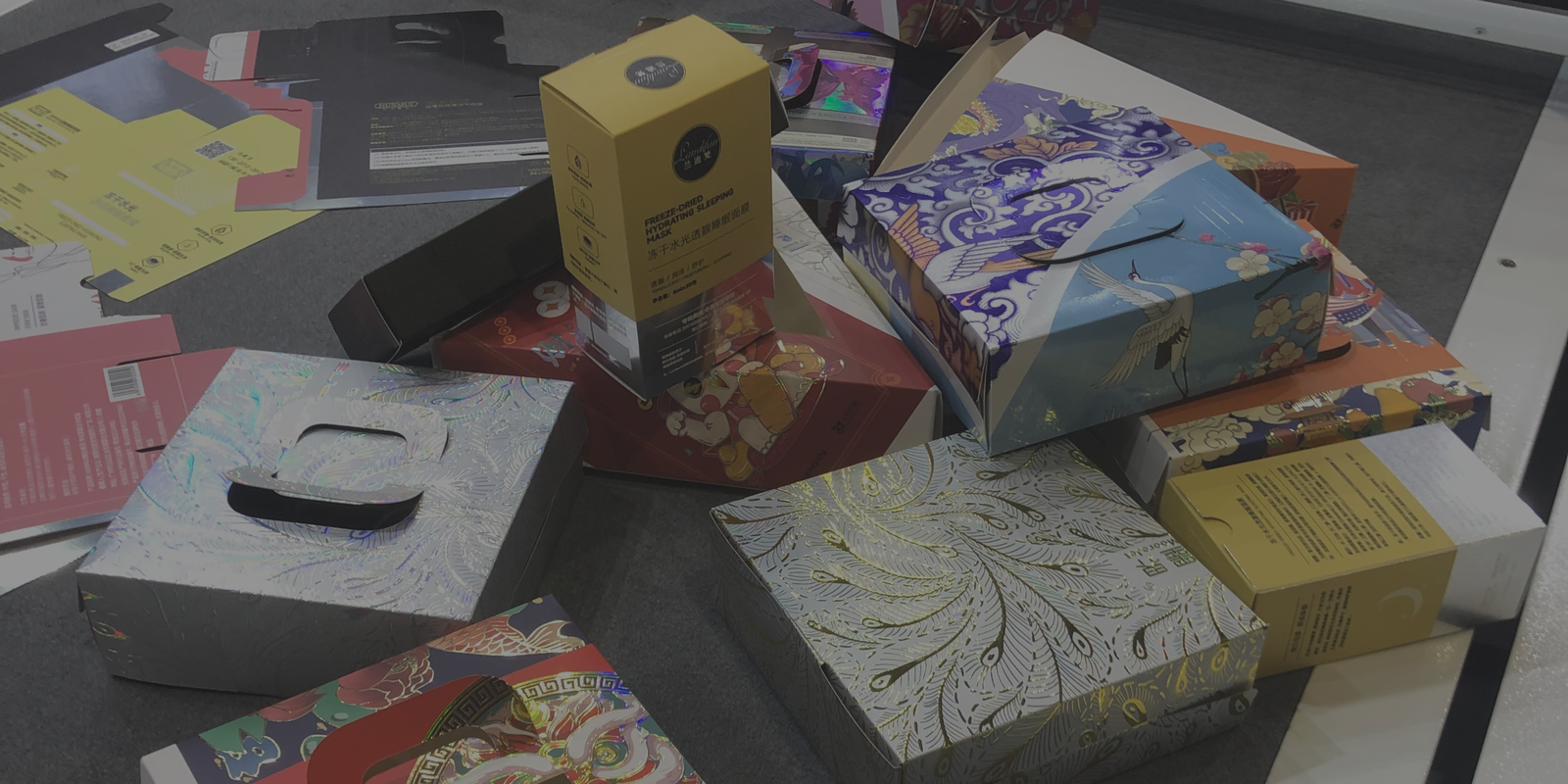
SAGA CNC cutters, plotters and trimmers are available through GZ Australia. How cutting, creasing and trimming turn printed work into finished products.
Pixy U3 UV DTF printer, front view
By Jake Einspinner • October 26, 2026
Why some UV DTF stickers lift and others stay put: white and varnish layers, the lamination rollers, static, cure and how you apply them.
Pixy T2 DTF printer with SK2 powder shaker
By Jake Einspinner • October 26, 2026
What makes a DTF transfer last: the white layer, the powder cure, film handling and the heads. How the Pixy T2, T4 and T5 lines are built for it.
A3HD desktop UV flatbed printer, front view
By Jake Einspinner • October 26, 2026
UV printer prices in Australia, ex GST: desktop A3HD from $14,990 up to the $119,990 H2513GN PRO, plus roll and mesh belt machines. What moves the price.
Apsaras G4D Max sublimation printer
By Jake Einspinner • October 26, 2026
Sublimation printers in Australia from $16,990 ex GST. Apsaras G2, G4L, G4, G5, G4D Max and G5 Max compared by width, heads, speed and who each suits.
Pixy T4 DTF printer with shaker and filtration unit
By Jake Einspinner • October 26, 2026
DTF or sublimation? What each one prints on, how the prints feel, what they cost in Australia (ex GST) and which suits your work. From GZ Australia.
The HB18UV UV belt printer, front on, shown in full on a light grey background
By Jake Einspinner • September 29, 2026
The HB18UV is our new 1.8 m mesh belt UV printer for leather, banner, backlit, vinyl and floor graphics: 45+ sqm/h in draft on the four-head, colour only.
GZ ink cost calculator card comparing the cost of a DTF transfer on GZ pricing with typical market c
By Jake Einspinner • August 13, 2026
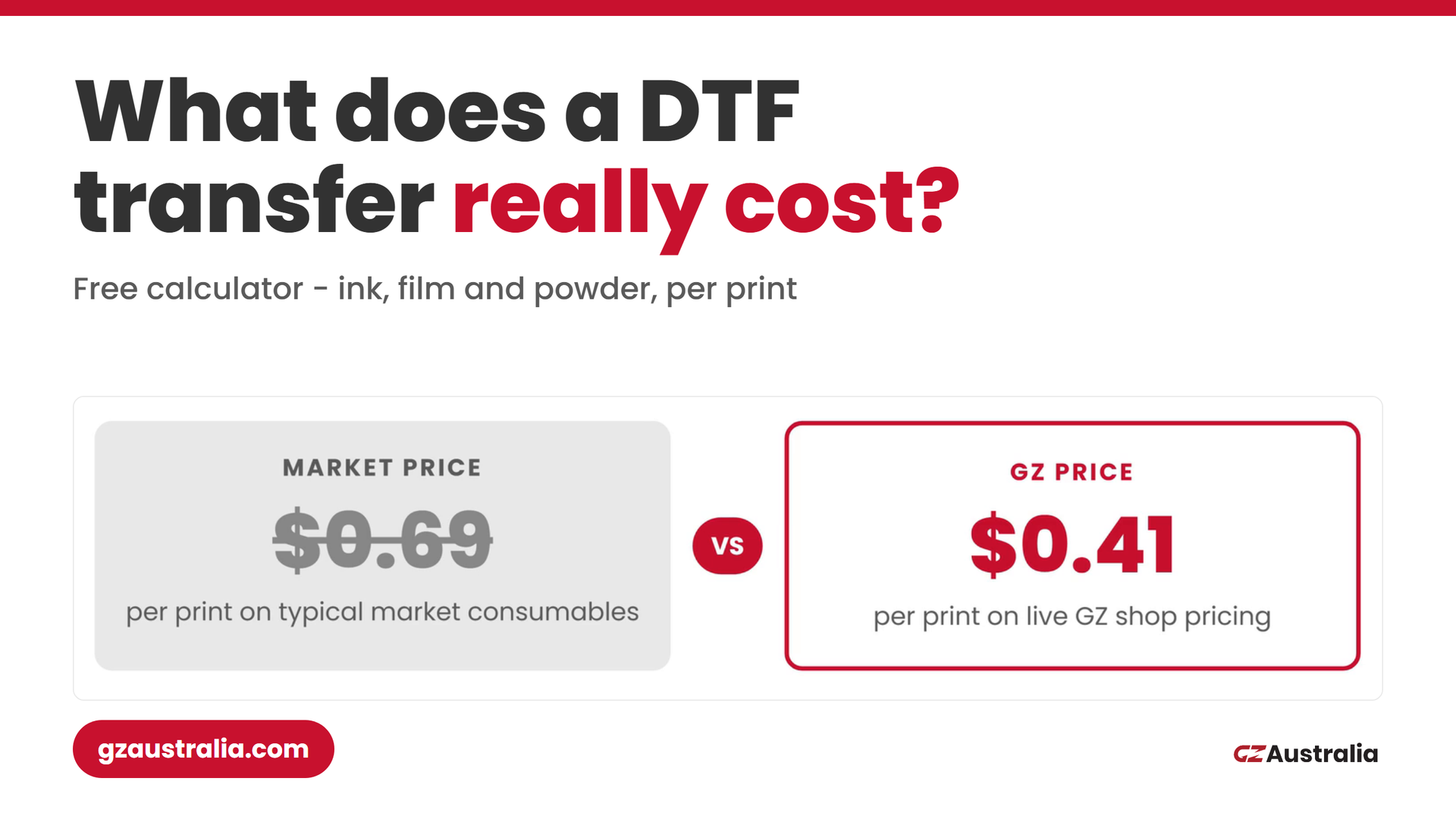
The GZ ink cost calculator prices DTF and UV DTF prints on live shop pricing: ink, film and powder per print, nested on the roll, with the maths shown. Free.
UV printed tumblers, phone cases, timber boards, golf balls and acrylic awards on a white table
By Jake Einspinner • January 29, 2026
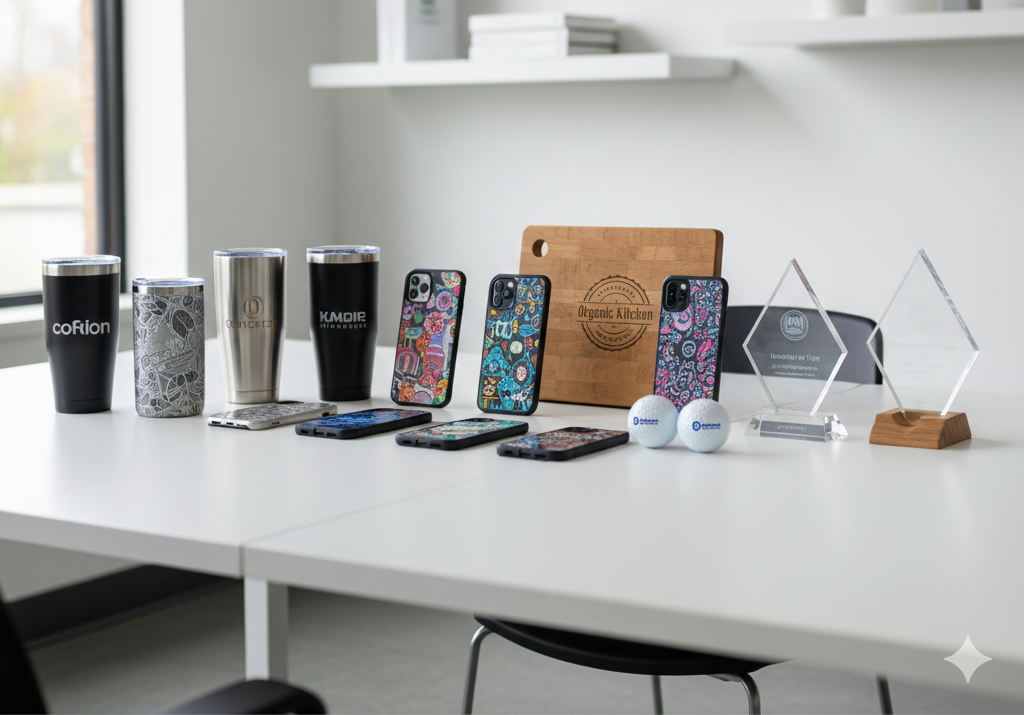
50+ things a UV flatbed prints on: drinkware, phone cases, glass and acrylic awards, signage, timber, leather and industrial parts, with zero setup.
Show More