By Jake Einspinner, GZ Australia. Updated 26 October 2026.
If the garments are cotton, or the customer wants a black tee, buy DTF. If the work is polyester sportswear, flags or fabric signage by the metre, buy sublimation. That one question, what fabric and what colour, settles most of it. The rest of this guide covers the cases where it doesn't, and what each setup costs in Australia.
What is the actual difference between DTF and sublimation?
They put the colour in different places.
DTF (direct to film)
prints your design onto a clear PET film. The colour goes down first and the white goes down last, so the white ends up as the base. A hot-melt adhesive powder is shaken onto the wet white ink, cured in a dryer, and the finished transfer is heat pressed onto the garment. You peel the film away and the print sits on the surface of the fabric, bonded by that adhesive layer.
Sublimation
prints dye ink onto transfer paper. Under a heat press or rotary calendar at around 200°C, the dye turns to a gas and goes into the polyester fibres. When it cools, the colour is part of the fabric rather than a layer on top. There's nothing to crack or peel, and nothing you can feel with your hand.
Which fabrics does each one print on?
|
DTF |
Sublimation |
| Cotton
|
Yes
|
No
|
| Polyester
|
Yes
|
Yes
|
| Blends
|
Yes
|
Only the polyester part takes the dye
|
| Black and dark fabric
|
Yes, the white layer is the base
|
No, the dye has no white to sit on
|
| Hard items
|
No
|
Polyester-coated blanks only
|
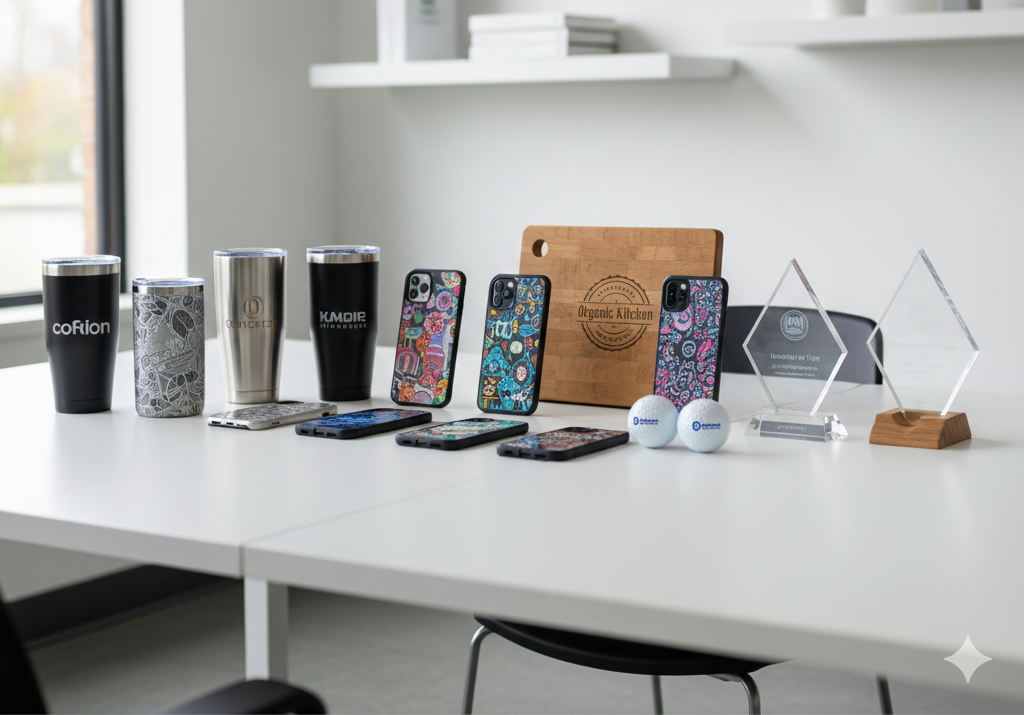
That last row is where people get caught. Sublimation needs polyester, or a polyester coating on a hard blank, to have anything to bond to. DTF needs a fabric that can take a heat press. Neither one is the answer for an untreated bottle, a phone case or a timber sign. That's UV DTF
or a UV flatbed.
Which one gives the better print?
Each wins on its own ground.
On white or light polyester, sublimation wins on feel and on large areas of colour. A full-print football jersey is sublimation work: edge to edge, seam to seam, breathable, because the dye is inside the fibre.
On everything else, DTF wins, because sublimation can't do it at all. A full-colour logo on a black cotton hoodie, a cap front, a hi-vis polo, a one-off name print on a blend: that's DTF. A properly cured DTF transfer stretches with the fabric, so it suits activewear as well as tees. What you'll notice is a thin layer on the surface, which is the trade-off for printing on any colour.
How fast is each one?
Sublimation is built for metres. DTF is built for variety.
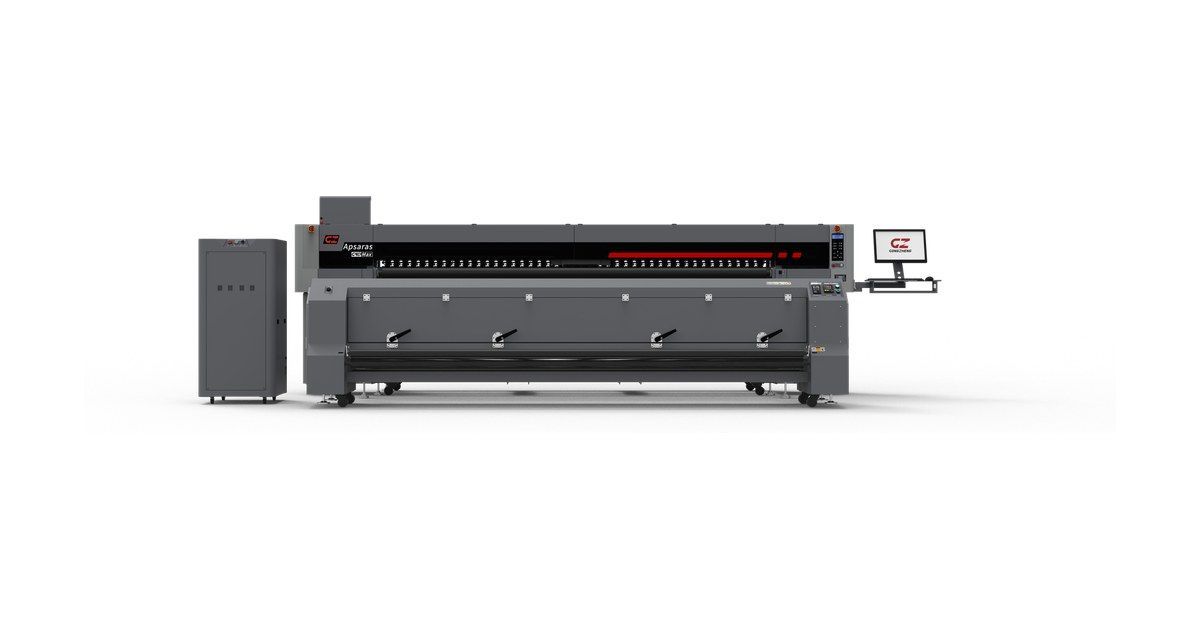
The Apsaras sublimation range runs 1.6 to 3.25 metres wide. The entry Apsaras G2
is rated up to 95 sqm/h in draft mode, and the eight-head Apsaras G5 Max
up to 403 sqm/h. That's how team uniforms and event flags get printed by the roll.
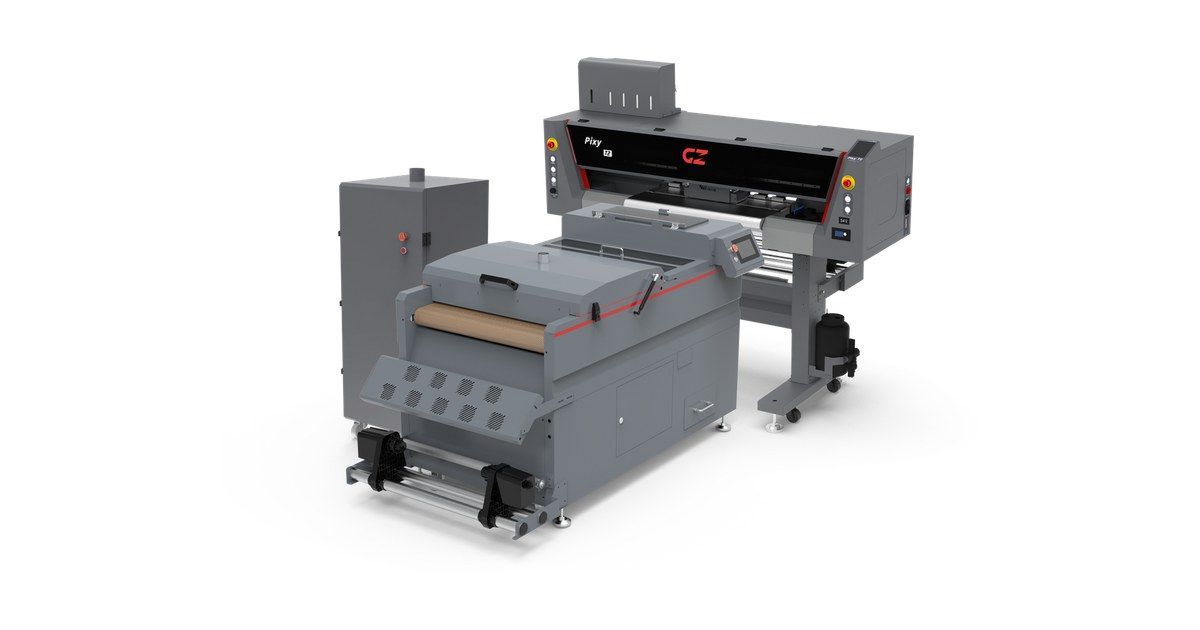
The Pixy DTF lines print on 60cm film. The Pixy T2
is rated at 15 m/h in four-pass mode and the four-head Pixy T4
at 30 m/h. You gang lots of small designs across that 60cm, so one run can carry a different design for every customer. There's no minimum order and no setup cost per design.
What does each setup cost in Australia?
| Machine |
What it is |
Cost (ex GST) |
| Apsaras G2
|
Sublimation, 1.6m, 2 heads
|
$16,990
|
| Apsaras G4L
|
Sublimation, 1.95m, 4 heads
|
$25,490
|
| Pixy T2 + SK2
|
DTF line, 60cm, 2 heads, shaker and dryer
|
$27,990
|
| Pixy T4
|
DTF line, 60cm, 4 heads, shaker and dryer
|
$32,990
|
| Apsaras G4
|
Sublimation, 1.95m, 4 heads, industrial feeder
|
$31,990
|
| Pixy T5
|
DTF line, 60cm, 5 heads, SK5 shaker
|
$37,990
|
| Apsaras G5
|
Sublimation, 1.95m, 8 heads
|
$49,990
|
| Apsaras G5 Max
|
Sublimation, 3.25m, 8 heads
|
$69,990
|
Prices are AUD, ex GST (10% is added on top) and ex freight. Installation, training and the 2-year machine warranty
are included.
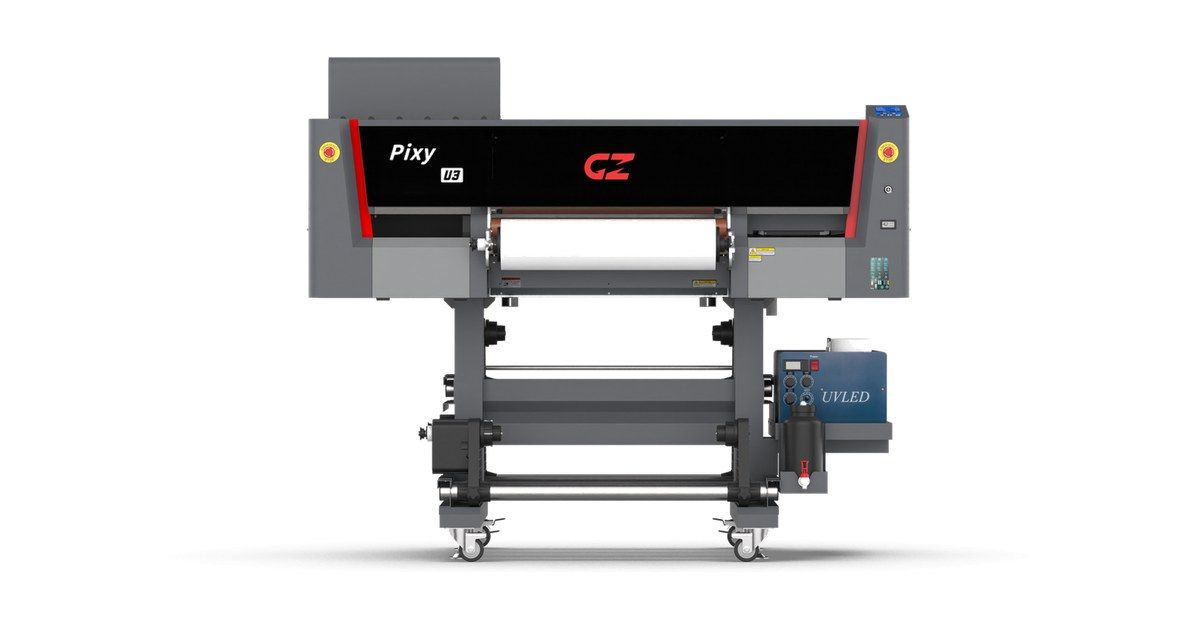
The entry prices look close, so compare what's in the box. A Pixy DTF price is a whole line: printer, powder shaker and dryer. The T2 comes with the SK2 shaker, which has its smoke filter built in, and every Australian T2 includes the EU-standard safety kit. You'll still need a heat press for both technologies, and sublimation needs one big enough for your widest job.
Can one business run both?
Yes, and plenty of apparel shops end up there. The usual path is to start with whichever matches the bulk of your orders, then add the other when you're turning work away.
A club uniform supplier starts on sublimation for the jerseys, then adds DTF for the cotton supporter tees and the black hoodies. A merch printer starts on DTF for one-off and short-run orders, then adds sublimation when a sports club asks for a full set of matching kits. Both finish on a heat press, and both come from the same people, so training and support stay in one place.
Which should you buy?
- Mostly cotton, dark garments, or lots of different designs in small runs:
DTF. Start with the DTF buying guide.
- Polyester sportswear, flags, banners or fabric by the metre:
sublimation. See the sublimation buying guide.
- Bottles, phone cases, tumblers and other hard items:
neither. Read the UV DTF guide.
DTF vs sublimation: common questions
Can sublimation print on cotton?
No. Sublimation dye only bonds to polyester fibres or a polyester coating. On cotton it won't hold. For cotton, use DTF.
Can DTF print on polyester sportswear?
Yes. DTF works on polyester, cotton and blends, in any fabric colour. For full edge-to-edge polyester jerseys, sublimation gives a softer, breathable result because the colour is inside the fibre.
Why can't sublimation print on black fabric?
Sublimation ink is a dye with no white in it, so it needs a white or light polyester background to show. DTF prints its own white layer under the colour, which is why it works on black.
Which is cheaper to start, DTF or sublimation?
The Apsaras G2 sublimation printer starts at $16,990 ex GST. The Pixy T2 DTF line starts at $27,990 ex GST, and that price includes the shaker, the dryer and the safety kit. Both need a heat press. Installation, training and a 2-year machine warranty are included with both.
Do I need a heat press for DTF and sublimation?
Yes. Both transfer the print with heat and pressure. Sublimation for roll work usually means a rotary calendar or a large-format press. Tell us your widest job and we'll talk through the press side.
Where can I talk to someone about DTF or sublimation in Australia?
Book a free 15-minute call with GZ Australia at gzaustralia.com/book-a-demo. Tell us what you print and the volume, and we'll match the right machine.
Not sure which way your orders lean? Tell us what you print and how much, and we'll match the right setup.
Book a free 15-minute call